Friday, January 7, 2022

The story of our mysterious childhood neighbor, the recluse of Rosedale

Introduction
Giovanni Boccaccio’s “The Decameron” is a classic work of Italian literature written during times of the Black Plague in Italy. Seven young women and three men moved to the country to isolate themselves and avoid becoming infected, and during their self-imposed exile, each person had to tell the others a story a day for 10 days, and thus the book tells 100 different stories.

Because of COVID-19, I have only been able to travel to Italy once in 2020 and 2021, and like Boccaccio, I have used some of my time to reflect and write. The result is a story that is unrelated to my time spent in Italy but is, rather, a reflection on a childhood experience. I had the privilege to grow up in the Rosedale neighborhood of Gig Harbor next to a man who is now largely forgotten, but during my youth, he was the stuff of legends, a man of mystery who inspired many stories. Some stories were actually true, but others were the fantastical products of half-truths and the vivid imaginations of his neighbors.

What follows is the result of my investigations into our childhood neighbor, Mr. Raynard Sohrweide.

***

The Old Goat Man of Rosedale

By Paul Spadoni

Copyright January, 2022

Chapter 1

A fine line separates the weary recluse from the fearful hermit. Finer still is the line between hermit and bitter misanthrope. Dean Koontz
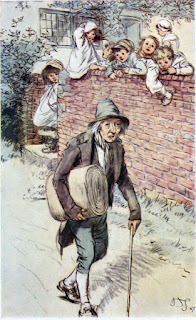
 

Silas Marner, as drawn
by Hugh Thomson
Silas Marner is the tale of an outsider recluse in England who was regarded with curiosity and suspicion by his neighbors. I read this novel by George Eliot during high school. Having grown up in a rural Gig Harbor Peninsula neighborhood next to a similar man, I didn’t appreciate how rare it was to encounter a true hermit.

We called him Mr. Shorewidey, or “the old goat man,” though by the time I was old enough to meet him, his goats were gone, replaced for a time by dogs. I have little to no recollection of the dogs, either; they didn’t last long. Mr. Sohrweide—his true last name—spent his final years next to Spadoni Hill in Rosedale living in nearly utter seclusion.

To me and the many cousins who grew up as my neighbors, Sohrweide was a man of mystery. I encountered him only a few times. Some of my neighbors and cousins can’t even recall meeting him, yet he somehow made a deep impression.

Dick Meyer Jr, with whom I grew up playing youth league and high school baseball, lived on a farm just north of Sohrweide.

“He was a legend of mythic proportions in our house,” Dick said of Sohrweide. “I have no memory of actually meeting him. But I do remember always running anytime we passed the trail that led to his house in the event he would see us and take us up the hill, and we would never be seen or heard from again. My dad really enjoyed playing on our imaginations.”

My sister Linda, eight years older than I, remembers Sohrweide and his goats. One of the goats head-butted her to the ground, resulting in a childhood fear of goats—though as an adult Linda farmed goats herself, so the fear was not permanent.

“He wasn’t friendly to us,” she said. “We were all scared of him because the reputation was that if you came on his property, he would shoot you with a shotgun. But we never went over there. We’d dare each other to go further down the trail and further down the trail, but if we heard a noise, we’d run back. We didn’t know if he’d actually shoot people with a shotgun.”

Cousin Dave Langhelm grew up on property at the head of the Rosedale lagoon that shared a border with Sohrweide on the south. The family moved there in 1949. “As a kid, I was terrified of him,” Dave said. “I can’t remember meeting him, but we used to play around in the woods near his property, and sometimes we went on it. It stunk highly of goats around his house. We considered it a great feat to go on his land without being caught and yelled at.”

The story of sneaking around the edges of Sohrweide’s property was repeated by several childhood friends and neighbors.

“I never talked to Mr. Sohrweide, but he was source of great excitement,” said Darlene Elford Kiefer, who grew up on Spadoni Hill. “We never saw him, but we used to sneak as close to his cabin as we could and watch for him. We believed that he had a rifle and would shoot us. I remember one time looking around his cabin, but the only thing that stuck in my mind is that he had little packets that you added to butter to make it yellow.”

Darlene’s sister Maize (known as Patty when younger) Elford recalls being unafraid of Sohrweide, but she agrees that he was enigmatic. “Mr. Sohrweide was a mysterious character to us,” she said. “We were fascinated by him and wanted to know more about him. Now and then we would see him walking down the road past our homes. His persona was gentle; he was not threatening.”

Jim Langhelm, Dave’s older brother, said, “We kids were scared of him and never went on his land, and I don’t remember ever talking to him. My only contact with him was on the occasion that I was in the car when dad gave him a ride when he came upon him walking on the road. I also remembered that he ‘witched’ the spot in the back yard where dad and I dug the well we used for several years. I was around 10 when we dug it.”

How did Sohrweide come to live on his wooded 50 acres? What was he like? What was his source of income? His past? Did he have family somewhere? What drove him into seclusion?

For Silas Marner, the betrayal of his business partner, who stole Marner’s fiancé and framed Marner for embezzlement, drove him into seclusion. He worked alone on the edge of a rock pit, weaving cloth for sustenance.

The questionable sound of Silas’s loom, so unlike the natural cheerful trotting of the winnowing-machine, or the simpler rhythm of the flail, had a half-fearful fascination for the Raveloe boys, who would often leave off their nutting or birds’-nesting to peep in at the window of the stone cottage, counterbalancing a certain awe at the mysterious action of the loom, by a pleasant sense of scornful superiority, drawn from the mockery of its alternating noises, along with the bent, tread-mill attitude of the weaver. But sometimes it happened that Marner, pausing to adjust an irregularity in his thread, became aware of the small scoundrels, and, though chary of his time, he liked their intrusion so ill that he would descend from his loom, and, opening the door, would fix on them a gaze that was always enough to make them take to their legs in terror. Nobody in this world but himself knew that he was the same Silas Marner who had once loved his fellow with tender love, and trusted in an unseen goodness. Even to himself that past experience had become dim.
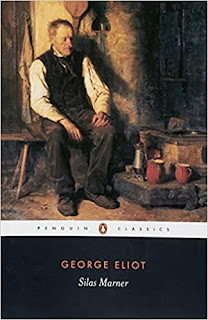
Silas Marner eventually rejoined society, but Sohrweide, who apparently had a fairly normal childhood and young adulthood, gradually became more reclusive as the years went by. None of those of us living now who grew up next to Sohrweide really knew much about his past. We can recall bits and pieces of stories told here and there. Some of what we believe is accurate, but much is not, as I have discovered.

Continue to chapter 2


Sunday, January 2, 2022

More Seghieri families in the world

Through a combination of the marvels of the internet along with painstaking research in ancient documents, I’ve recently found the connection to another branch of the Seghieri family in France. And just days later, I made a connection to a separate Seghieri line in Argentina.

The French family joined one of the two Seghieri family Facebook pages, and from there made friends with other French relatives. Florian Seghieri and Georges Seghieri, members of this previously undiscovered line, are now considering attending the family reunion in Montecarlo in May.

However, the new family did not know exactly how they were connected to the family tree. This is where the old-fashioned research comes in, and the credit for that belongs to family friend Sergio Nelli. Doctor Nelli is a famous Montecarlo historian and author who has spent countless days poring through civil and church records and compiling information on the founding families of Montecarlo.

Doctor Nelli has kindly shared some of his research on the Seghieri family with me, which I have compiled into a huge family tree kept in a computer database. Using his information, it was a simple matter to find the ancestor who moved from Italy to France in the mid-1800s. Adamo Emilio Seghieri, born in Montecarlo in 1851, largely disappeared from my database—and next appears in French records when he married Thérèse Pacouill in 1878 in Millas. Later that year, Thérèse gave birth to Antoine Seghieri, the great grandfather of Florian.

The Argentine Seghieri family connection came about when Graciela Seghieri asked on the Seghieri / Seghieri Facebook page if anyone had information about Nello Seghieri and his brother Armando. I had both of these men in the family tree, born in Montecarlo around 1900, but I had no information about them after that time. As it turns out, this is because both of them emigrated to Argentina. Armando had returned to Italy for some visits, Graciela said, but Nello never did. Nello had four children, three of whom are now deceased, and Graciela is his granddaughter. Ancestry.com shows that Graciela’s late father Humberto was my fourth cousin. I have been using Google translate to write to Graciela in Portuguese. Who knows, maybe someone from her family will want to come to the reunion?

Monday, November 22, 2021

Pineapple on pizza: Sacrilege or welcome innovation?

I’m a member of a number of Italian American Facebook groups, and every so often some one brings up the topic of putting pineapple on pizza. It is usually met with a chorus of strong disapproval, sometimes for reasons of taste but most often because pineapple is not a pizza topping used in Italy, so that makes it an affront to Italians—and by extension, Italian Americans.

This was posted on one of my
Italian American Facebook pages.
Here’s a comment from Sal Milo: “No true Italian would eat it or put it on a pizza. I make pizzas all the time and have been making them for most of my life, and I still will not put it on a pizza.” Another comes from Bill Giglio: “That’s an abomination!” Philip Pannucci wrote: “That’s an insult to pizza.” Frank Lombardo said, “Real Italians would never destroy a pie with the disgusting fruit on it. If you said yes, for the love of God, leave this page.”

Hawaiian pizza,
with ham & pineapple.
I understand that Italian-Americans are rightfully proud of their heritage. I am also fiercely proud to be Italian-American, so much so that I’ve obtained Italian citizenship and purchased a home in the Italian city where my grandparents were born, raised and married. I’m also proud that Italian food is famous worldwide for being so incredibly delicious, fresh and healthy.

However, on the topic of pineapple on pizza, I think we Italian Americans are being a bit closeminded and even snobbish when we summarily dismiss pineapple as a topping possibility. I know this viewpoint will rub some of my friends the wrong way, but consider some history. Many famous Italian dishes and desserts were only made possible by blending the local cuisine with influences from other cultures. For example, sugar, coffee and tomatoes are all imports.

Furthermore, pizza as we know it today has been around for less than two centuries, and in the beginning the toppings were limited. A simple pizza margherita with tomato sauce, olive oil, mozzarella cheese, basil and salt is still preferred by many Italians. That would mean that many of the toppings used since pizza became popular worldwide in the mid-1900s—sausage, peppers, onions, olives, mushrooms, ham, eggplant, artichokes, anchovies, other cheeses, etc.—may have been considered strange when they were first used. But to everyone’s benefit, Italians embraced these diverse choices. I’ve recently been to a number of pizzerias in Italy where French fries and hotdogs are used as toppings—and no one in Italy seems shocked by these.

I will concede that most Italians would not embrace what Americans refer to as Hawaiian pizza, with ham and canned pineapples as toppings, but that has more to do with the fact that Italian pizzas are different than American in the first place, and also because the ham is not as good as Italian prosciutto, and the pineapple is canned and not fresh.

I also find it interesting to note that most of the negative Facebook comments come from Italian Americans, while the occasional native Italian will come out with a comment such as this, from Sandro Cirillo: “I feel that purists are shooting themselves in the foot if they express that some ingredients shouldn’t go on pizza, one of the most versatile dishes that we Italians have. We stick Nutella in it, we put in fries, hotdogs and ketchup over it. We stuff it with figs, blue cheese and honey.”

Cirillo adds that Italians who have sampled Hawaiian pizza were “horrified because the tomato base, processed cheese, cheap ham and tinned pineapple are frankly horrendous.” But he then goes on to say, “Foodies would welcome pineapple on pizza provided that it’s paired with the right ingredients.” For this, Sandro suggests fresh grilled pineapple combined with “smoked brisket, pulled pork with chillies, or spicy prawns and chorizo.” Cheese would be included, but no tomato base.

Cirillo was born near Rome and attended catering college in Italy. He is married to a chef, and he has been in the catering business for more than 20 years. “Italian food never stopped evolving in Italy,” he said. “There is always something new or local secret recipes or ingredients that become mainstream. Sadly, I’ve noticed way too many Italian Americans who have a skewed idea of Italian food and show rigidity.”

After I started a discussion on another Facebook page, Maria Luigia chimed in with this concurring comment: “Im from Italy born and raised. First time I tried pineapple pizza I almost puked. The combo tomato sauce and pineapple is awful to me, but once I tried a very good pineapple pizza with no tomato but a good amount of ventricina (a sausage), pineapple cut in really small pieces, cheese and some cilantro. It was good!

Cirillo does admit that Italians typically can be quite opinionated about food. He recognizes this as an Italian trait, and he is not offended by those who have other views. “We constantly talk about food,” he said. “While we’re having lunch, we already discussing what to make for dinner.”

Cirillo and I agree that while a certain amount of rigidity is necessary, we also need to be open to innovation. While it’s fine to engage in spirited debates about the merits of various meals and ingredients, these discussions should take place in an atmosphere of friendliness and civility—preferably over a nice Italian lunch or dinner. Just not spaghetti and meatballs—oops, another hot topic.


Wednesday, October 27, 2021

Where to stay for the family reunion

Wow, so many places to choose from! I’m compiling a list of places classified by location, with a few comments that might help guests prioritize. I’m not putting down contact info here, but most of these can be easily found by putting in the name and adding the search term “Montecarlo, Lucca.”

While it is usually recommended that visitors do not rent a car when visiting the major and moderately sized cities such as Venice, Florence, Rome, Milan, Naples, Padova, Lucca, Orvieto, etc., a car is usually the best choice to visit the small hill towns of Tuscany. However, it is possible to come to the family reunion without renting a car, with some careful planning. It is highly likely that I will be renting a bus or vans (with drivers) to take everyone on family history tours and other events, so if you can make it by train to a central location—the central piazza in San Salvatore, near the Montecarlo/San Salvatore train station, you’ll be able to save money by not renting a car. Daily activities on Monday, Tuesday and Wednesday all begin in San Salvatore at 8 a.m. On the other days, you can walk to the train station.

The farm of Giustina


NO CAR RENTAL NEEDED

Il Podere di Giustina B&B: This is one kilometer from the San Salvatore central piazza, about a 12-minute walk. This B&B actually does have breakfast, the hosts are wonderful and helpful people, and the price can’t be matched. Marco speaks Italian, English and French. If you let him know when you are coming, he will pick you up at the train station in Pescia or Montecarlo. There is also a shortcut trail that will make the walk only 10 minutes. Unfortunately, they have only one room.

La Valinfiore Charming Home: This one is even closer to San Salvatore piazza, only 600 meters. Two bedrooms, two bathrooms, maximum six guests.

The “train house” of our Norwegian friends: This is not a formal guest house, but our friends have offered to rent out their three upstairs guest rooms at an excellent price. They only rent to friends and friends of friends. They are excellent hosts, speak English well, and will include a breakfast. Lucy and I once dreamed of buying this house when it was a broken-down ruin. We called it the “train house” then, because it was near the train track. It is now completely refinished with a beautiful yard where our friends grow fruits, vegetables and flowers, and the chickens provide fresh eggs. It is about 1200 meters from the piazza, a 15-minute walk. Contact me for more info.

Villa del Dottore Country House, Antico Casale La Piaggia: These two are also close to the train station, just 850 meters and 1100 meters, respectively.


Hotel/Albergo Natucci
: Does the name Natucci sound familiar? Members of this family intermarried with the Spadoni/Seghieri clan in Washington three times, and cousin Gina Natucci can arrange for you to stay at this comfortable and homey hotel in Montecatini Terme. While this is about a half hour from Montecarlo by car or train, a car and driver can be added to your arrangements at a bargain price. You can contact Gina (she lives in Tacoma and is a state Sons and Daughters of Italy officer) to assist with the arrangements.

Hotel Paola: This is just three minutes by foot from the Altopascio train station, and there is a daily train from Altopascio to Montecarlo/San Salvatore from 7:57 to 8:01 a.m., which would bring you to Montecarlo at just the right time for morning activities.

SPECIAL SIGNIFICANCE

Casolare dei Fiori


Casolare dei Fiore:
 This agriturismo is owned by Gilda Seghieri & Enzo Pasquinelli and their family. Gilda is an 8th cousin to many of us who had a Seghieri (Egidio, Dante, Anita, Jim, Roger, Rosina) as grandparent. Lucy and I stayed here every winter/spring from 2011-15. It is located in the heart of the Seghieri neighborhood of via Mattonaia. It’s about 2 kilometers from the San Salvatore piazza, so it’s probably best to have a car, though it’s a pleasant 21-minute walk.

IN THE HEART OF MONTECARLO

You will need a car to climb the hill to Montecarlo, and the rooms are probably more expensive, but there are good reasons to consider this option. It is a gorgeous medieval city with great views of the plain of Lucca and the Valdinievole. It has a plethora of fine restaurants and places to shop for clothing, shoes, ceramics, art and souvenirs. For the first three places, you can step outside your door and enjoy a morning cappuccino or evening aperitivo. Here are places where you can inquire for reservations:
Antica Casa dei Rassicurati B&B
Antica Casa Naldi
Antica Dimora Patrizia B&B
Villa Centoni B&B (outside the walls, about 8 minutes by foot)
Fattoria La Torre (about 12 minutes by foot)

Antica Dimora Patrizia

SO MANY OTHERS . . .

If you have a car, there are dozens of fabulous places to stay. You can easily find their websites and see where they are located by map. You can also find even more places by joining Vrbo.com or Airbnb.com. And if you expand the search to Pescia, Chiesina Uzzanese, Altopascio, Ponte Buggianese and Borgo a Buggiano—all only a short drive from Montecarlo—the list becomes even longer. Here is a short list of the places closest to Montecarlo:
Al Gattosaggio
Villa La Nina
Agriturismo San Gallo
Agricola Posapiano
Fattoria Vigna del Greppo
Fattoria Cercatoia Alta
Villa il Guffo
Agriturismo Tori Alberto
B&B La Casetta
Agriturismo Casa Fontanino
Tenuta degli Obizzi
Residence il Sole
Villa Monica

Sunday, October 24, 2021

Important notice about the Spadoni-Seghieri family reunion! Response needed in order for plans to proceed

Notice to all cousins thinking about attending the Spadoni-Seghieri family reunion: It is time to make some decisions! The plans are coming together, and it is imperative that I have some idea how many people will be coming. We already know a large group of Seghieri family members from France is planning to attend, and it is possible that we will have to limit attendance at some events because of space limitations. Thus, I am asking people to register by sending me an email (pspadoni@gmail.com) or contacting me on Facebook.

I’ve planned the first three days, May 2-4, in great detail. In general, the first two days will primarily cover sites of interest to the family Spadoni, and May 5 is dedicated to the family Seghieri. However, the evening of May 6 will include a dinner and presentations on both Spadoni and Seghieri families—with historical and genealogical information.

Sauro uses his special technique
on cousin Ilaria Spadoni

Beyond that, members of the French Seghieri delegation, with the help of extraordinary tour guide Elena Benvenuti, are planning a fantastic assortment of social and touristic events for May 6-8 that will appeal to members of both families.

Please read through the following schedule. Cost for meals, tour guides and transportation will run around $60-100 per day, per person. Then contact me expressing your interest in attending. Please specify the likely number of your group and--very important--which days you plan to attend. Once I have an idea of the numbers, I will be able to provide more accurate figures.

Spadoni-Seghieri 2022 Reunion Agenda

Monday, 2 May, Spadoni focus with dinner for ALL

8:30-8:40   Meet in piazza/parking lot*, San Salvatore

8:40            Depart for Massa e Cozzile

9:10             Arrive Massa**

9:50             Leave Massa

10:00          Arrive Buggiano Castello

11:00           Leave Buggiano Castello

11:15            Arrive Pescia, Piazza Mazzini, gelato at Bar Pulter

12:10           Leave Piazza Mazzini

 12:15           Arrive I 3 Angeli ristorante for lunch

14:00           Leave restaurant, pass by Castellare for photos of outside

14:25           Arrive Chiesina Uzzanese

14:30           E-Form Demonstration by Sauro Spadoni of Magic Hair***

15:15            Leave Chiesina Uzzanese

15:40           Arrive Torre degli Spadoni/San Donini in Parezzana

16:00           Tour ends, break in schedule

19:00           Picnic dinner at Azienda Agricola Stefannini, Montecarlo, organized by French Seghieri families. Via S. Piero, 7

*The piazza in San Salvatore is where Pietro Spadoni and Maria Marchi lived in the late 1800s and early 1900s, along with their children Enrico, Michele, Eugenio, Giuseppe, Zelinda (2 of them), Maria and Luisa. Of these children, only four survived to adulthood. Enrico and his wife Eufemia Banchieri had seven children, including Adolfo and Alfredo, who moved to Washington state in the early 1900s. Michele met Anita Seghieri, most likely at the little church in San Salvatore. They married there in November of 1908 and moved to Washington in 1909 and had seven children, six of whom were born in Washington and one (Lola) in Italy. Eugenio married Isola Fantozzi. Luisa married Angelo Pippi. Nothing else is known about the descendants of Eugenio and Luisa. The old house where the Spadoni family lived was destroyed in the early 1970s, but Roland Spadoni took some photos of it in 1968, so we have visual evidence that is was located exactly where we will be parking to begin our daily tours.

**Birthplace of Piacentino, Ezio, Gino, Nello and their father Luigi Spadoni. Luigi’s other son, Guilio Giuseppe, was born in Colle di Buggiano, which is about a mile away. These five sons all moved to California in the early 1900s. Nello’s son Gino was the founder of Spadoni’s Market in Eureka, California.

***E-Form is a unique technique of hair coloring, patented by renowned hairdresser Sauro Spadoni, who travels worldwide to demonstrate his techniques.


Tuesday, 3 May, focus on Spadoni

8:30           Meet in parking lot, San Salvatore

8:40           See inside of church in San Salvatore

9:00           Leave S. Salvatore

9:15            Arrive Stignano, see inside church*

10:00         Leave Stignano

10:15          Arrive Borgo a Buggiano, see inside church**

10:30         Break for gelato

11:30          Leave Borgo a Buggiano

11:00          Arrive cemetery Ponte Buggianese***

11:45           Leave cemetery

12:00          Arrive Ponte Buggianese centro

12:45          Leave Ponte Buggianese

13:00          Pizza at La Favola Mia of Leonello Spadoni, Chiesina U.

14:30          Leave La Favola Mia

15:00          Farm of Italo Cortesi. Tour farm, see site where Italo Spadoni was killed by Fascists. Meet Italo and Francesco Cortesi. The story of Italo Spadoni recounted.

16:00          Tour ends, break in schedule


17.00          Possibility to see cemeteries of Montecarlo and Marginone, where some members of the Seghieri family are buried.

19:00          Dinner at Casolare dei Fiori, San Salvatore, via Mattonaia, 20

*The church in Stignano is the earliest place where we have definitive records of our family’s history. Sometime in the 1400s, Francesco Spadoni moved to Stignano and had two children, Michele and Bartolomeo. All the many Spadoni families that today live in the Valdinievole are descendants of Francesco’s two sons, who were born in the late 1400s. At this time, it seems the family was quite wealthy; of the two family tombs under the floor of the church, one is for the Spadoni family. The other tomb is for the Guelfi family, and it is interesting to note that ancestors of both of Francesco’s sons married women in the Guelfi family in the 1500s. Thus we are all descendants of what are probably the two most important families of Stignano.

**In the late 1500s through the 1600s, Spadoni families began moving down from Stignano to Borgo a Buggiano and Ponte Buggianese (and at least one family moved to Buggiano Castello). The likely reason for this is improved drainage in the lowlands that uncovered excellent soil for farming. Other descendants moved farther away to Fucecchio, San Miniato and other communities between Stignano, Lucca and Pisa. There are also Spadoni families who live in the Garfagnana region (north of Lucca); we don’t know if they are connected to ours, but it is possible.

***The greatest concentration of Spadoni families today is still Ponte Buggianese. Emilio Spadoni was the sindaco (mayor) of Ponte Buggianese from 1896-1903, and Astolfo Spadoni was sindaco from 1923-27 and then podestà from 1927-31. The most famous Spadoni of Ponte Buggianese is Italo Spadoni, who was killed by a Fascist militia in 1924, and you can find his tombstone in the cemetery and a monument to him in the central piazza of the town, at the end of via Italo Spadoni.

Wednesday, 4 May, focus on Seghieri

8:30           Meet in parking lot, San Salvatore

8:35            See inside of church in San Salvatore

8:45            Leave S. Salvatore

8:55            Arrive Querchione*

9:15            Leave Querchione

9:30           Arrive San Gennaro**

10:20          Leave San Gennaro

10:40          Arrive Esselunga parking lot, gelato break at Igloo

11:05          Leave Esselunga

11:15           Park near Fior di Latte, an outlet store for Parmigiano Reggiano cheese and other artisan food

11:30          Pass on foot bike shop of Francesca Seghieri

11:45           Arrive on foot at the mercato usato, an excellent source of low-cost souvenirs

12:15           Return to cars, leave for Montecarlo

12:30          Lunch in Montecarlo on own.

14:00          Tour of Montecarlo with professional guides, directed by Elena Benvenuti, wife of Davide Seghieri. Possibly in Italian, French and English. Includes entrance to Fortezza di Montecarlo, Teatro dei Rassicurati, house of Paul & Lucy Spadoni.

17:00          Break in schedule


19:00          Group dinner at Fattoria Il Poggio, Via S. Piero, 39

*The Querchione is not part of our family’s history, but it is an interesting phenomena very near Montecarlo. This 600-year-old tree is among the most beautiful and famous in Italy, and it has some interesting stories surrounding it.

**The church in San Gennaro is of interest for two reasons. Torello Seghieri—the father of Anita, Ruggero, Seghiero (Jim) and Rosina Seghieri—was the chorale director of the Philharmonic Choir of the Church of San Gennaro in the early 1900s. By chance, this church also houses one of the few surviving sculptures of Leonardo da Vinci, a four-foot-tall statue of the archangel Gabriel. Although there is no definitive archival evidence on the origin of the statue, the foremost expert (now deceased) on Leonardo had no doubts it was the work of a young Leonardo.


Thursday, 5 May, Social & tourist event in day. Formal presentations in the evening.

TBD           Meet at Villa Reale for tour, picnic lunch, arranged by Elena Benvenuti and French Seghieri families.


17:00           Presentation on Spadoni family history & genealogy

19:00           Pizza dinner at La Terrazza, Montecarlo

21:00          Presentation on Seghieri family history & genealogy


Friday, 6 May, social and touristic activities

TBD            Meet at Pietrasanta for tour of Pietrasanta and quarries of Carrara, arranged by Elena Benvenuti and French Seghieri families.


Saturday, 7 May, Farewell aperitivo in evening.

TBD            Tour of Lucca in morning, possibility to rent bikes in afternoon in Lucca.

19:00           Aperitivo at Casone di Marcucci, via Mattonia. Tour of farms of Ivo and other Seghieri families.


Wednesday, October 20, 2021

E-bikes add to pleasure of planning for family reunion; never mind the bumps

We’ve reached a conclusion about our experiment with e-bikes in Montecarlo: They are a smashing success! I’ve ridden mine every day since we turned in our rental car. Even if I have no particular place to go, I think of something that needs to be done, just to give me reason to take a ride. Lucy does not go out as often, but when she does, she loves it too, and the power our bikes provide make it easy to climb back up the hill to our house.

Research is such hard work!

When we stayed at the Casolare dei Fiori from 2010-2015, we used our old mono-speed bikes as our primary means of transportation. The train station was a 10-minute ride away on roads that were mostly flat. We could reach Pescia, Altopascio, Chiesina Uzzanese, Borgo a Buggiano and Ponte Buggianese easily, as they are all on the same elevation as San Salvatore. For the most part, we could ride on back roads that had little traffic.

Our cousin and guide Elena,
 with me. Visiting friends
and planning for the family
reunion are easy with e-bikes

All of that ended in the fall of 2015, when we bought a home in Montecarlo which we dearly love—both the city and the house. Our old bikes couldnt make the climb up the hill, so ever since, we rented a car each time we came, until now. While we may need to rent a car again on rare occasions, for the most part, our bikes will serve us for all our needs—and give us much more pleasure than a car. Riding in the open air through splendorous Tuscan fields and olive orchards is heavenly. Doing it on bikes that require almost no effort and are soundless except for the whirl of wheels on the pavement is like an exquisite dream of flying just a few feet off the ground.

We do encounter a few "bumps in the road."

OK, maybe that’s going a little too far, because there are a few drawbacks. It hasn’t rained here since we started using the bikes, and that will probably change by tomorrow. And the temperatures are dropping from the low 70s to the mid 60s. In November and February, months we also like to spend in Montecarlo, it’s not going to be as pleasant as it is in the other months that we’re often here—March, April, September and October.

A long, ragged patch
with concrete.

One other small drawback is the condition of the roads. It’s astounding to me that a country that has produced some of the world’s greatest craftsmen, architects, artists, masons, engineers and inventors can be so terrible at making and patching asphalt roads. I can accept that the roads are often narrow, because the rights of way historically only had to fit horse and donkey carts. I can even accept that the country couldn’t afford to put down a decent gravel base before they paved most of the rural roads. Most of the paths had undergone centuries of use, and the base was already well compacted. What surprises me the most is the incredibly poor job of patching that the workers perform, and that the government allows this.

We often have to ride close to the edge of the roads to allow cars to pass, and that’s where much of the patching takes place, so we must bounce over patched road crossings where utilities have been installed. The patches are usually done with cold mix asphalt compacted only by traffic, and sometimes roughly laid concrete that was not even allowed to cure before it was opened to traffic. Give me a break, you guys! Take some pride in your work. Even without using hot asphalt and a roller, you could make patches that are at least level. Instead, they are either raised up like speed bumps or sunken down and misshapen.

Enough ranting, I guess. No, not quite enough. I know I’m more sensitive to this because I still do asphalt patching as a profession. I take pride in driving over an area I’ve patched without feeling any change in grade. Don’t these workers drive on their own roads? Doesn’t the government have any power to reject obviously inferior work?

An important stop on
our reunion schedule
will be at the farm
of cousin Ivo.

OK, I’ve finally finished with my rant and can return to the joy of riding our bikes. I’m currently working on researching places to visit and things to do during the family reunion next May. Last week we rode to Elena’s house and made some plans. I learned that the French Seghieri families are way ahead of us. They already know that about 35 people will be coming from France the first week in May, and they have a tentative plan for their activities. I realized that I have no idea how many people are coming from America, so I need to start taking reservations and figuring out expenses. In the past week, I’ve been refining the agenda, sampling and reserving restaurants and exploring meeting places while also working out how to fit our plans together with our French family members. All of this is made more pleasant by doing it via bike rather than car, so I really should not be complaining about a few bumps in the road.


Tuesday, October 12, 2021

E-bike experiment going well

We are car-less in Montecarlo! We returned last week from a fantastic two-week excursion in Basilicata and Campania, and I turned in our rental car after I took our friends to the airport. I caught the train home, and now we are finding out what life will be like here without a car. So far, so good.

E-bikes on the Lucca wall make us happy!

We actually advanced our plans, because we had only planned to purchase one electric-boost bike this fall and then get another in the spring if the fall car-less experiment proved successful. But a Facebook friend near us had purchased a new e-bike earlier this year, and then she and her husband decided to move back to the United States. She had been advertising the bike for sale for several months, without success, and we decided to make an offer much below what she had hoped to receive. She accepted the offer, and we drove to Gallicano to pick it up two days before we had to relinquish our rental car. We also stopped at Esselunga and bought about 200 euro worth of groceries, knowing that for the next three weeks, we will be limited to buying only what we can carry on our bikes.

We only had two days to try out Lucy’s bike before we had to put it to its first big test—riding 3.2 miles one way to our church in Altopascio. During those two days, Lucy resisted trying it out. She was tired from our southern vacation, and she still had vivid memories of a time she had taken a fall on her shaky old mono-speed bike some years ago. That happened when a motorcyclist frightened her by coming up behind her suddenly on a bumpy road in Altopascio. She wanted to have some time to get used to the new bike gradually, but Sunday came too suddenly.

The weather was beautiful, but Lucy wasn’t ready. Had we been able to start out on level ground, she would have been fine, but exiting Montecarlo requires going downhill on a steep incline. She got on her bike and made it down a lesser incline, but when she reached the first steep part, she backed out. Ironically, she had done fine in Basilicata going at a speed of 70 mph on ziplines 3,300 feet high—and walking over two narrow suspension bridges that were 400 feet from the ground. The problem here was that Lucy had not ridden a bike since 2015, when we bought our Montecarlo home, and she had not had time to learn to trust the brakes of this new bike. I assured her that the disc brakes made this the safest bike she had ever used, but she wasn’t convinced. I escorted her home, and then went on to church without her.

What would it take to get her to try again? She said she wanted the bike checked out in the bike shop in Lucca. The seat was too low, and even though we tried to adjust it several times, it would not remain at the proper height. The disc brakes squealed a bit, and that contributed to her lack of confidence. She also wanted the option to take her time and walk the bike down the steepest parts, if necessary. But the only way to get both Lucy and the bike to the shop in Lucca required riding to Altopascio and going on the train.

We decided to try again Monday afternoon, with no fixed deadline. We set out to take the 1:30 train, but there would be another train an hour later if we didn’t make the first one. This time, without the pressure of the clock, she made it down fine, going slowly at first but still riding all the way. Once we got on level ground, she gained even more confidence, and we made the train with time to spare. And even better, by that time, Lucy’s brakes no longer squealed.

Mauro and Laurie at the bike shop where we had purchased my bike were amazingly helpful. Mauro took us to his workshop and installed a new clamp that kept the seat stable, and he tightened some other fittings that could have become problems in the future. He adjusted an out-of-alignment fender and assured us that it was normal for new disc brakes to make some noise until they are fully broken in. Mauro refused to take payment for his help, but we went back into the store and bought a pump and two new chains to securely lock our bikes when we go grocery shopping.

We had 45 minutes to wait until the next train, so we took a leisurely lap around the city wall, something we have not been able to do on bicycles for several years. Then it was back on the train to Altopascio—with the ultimate test yet to come: the climb to Montecarlo. For the most part, the fears that Lucy had been feeling dissipated more and more with each meter she climbed.

“I counted again, as I did on the Ponte alla Luna, to keep my mind off the idea that I can’t make it,” she said. “My fear was that you had to keep pedaling all the way to the top, that if you stop, you can’t get started again, but that’s not true.  I took a couple of short breaks and was easily able to start up again.”

Today I rode to Pescia to visit cousins Grazia and Marta, and then I picked up a few groceries at Esselunga. The ascent from the Pescia side of the hill of Montecarlo is much steeper than from Altopascio, but I made it home without breaking into a sweat. I think we’re going to do this!